Planned 'universal health code' linked to health data platform sparks fears in China*
China is planning to digitize the medical records of its 1.4 billion people, harnessing the power of big data to track the health status of everyone in the country and sparking fears that the planned "universal health code" will become yet another tool for controlling the country"s citizens.
A joint directive issued on Nov. 9 by the country"s National Health Commission and other health-related agencies, calls for the installation of "dynamically managed electronic health records and universal electronic health codes for every resident" by 2025.
In practice, this will mean that the healthcare records of every individual in mainland China will be digitized, linked to their national ID card number via a national platform, and integrated with a unified health code that can be widely shared among hospitals, clinics and, potentially, government agencies.
The news prompted an outcry on social media, sparking comparisons with a fictional surveillance system portrayed on the dystopian TV show Black Mirror.
One comment on Twitter said the system was similar to electronic tagging systems used to manage livestock, while another worried that it would give rise to a points system like the one in Black Mirror. Comments on Sina Weibo showed similar concerns.
California-based healthcare practitioner Chen Guodong said the move could violate patient confidentiality.
"If your medical information can be freely shared with others, or easily obtained by a government, this will have a massive impact on your marriage, employment and higher education prospects," Chen said.
"The content of consultations between doctors and patients, and patient information, are strictly confidential and cannot be shared with third parties," he said. "This action by the Chinese government is a total invasion of privacy."
Chinese media outlet Caixin.com quoted people close to the health ministry as saying that there was a difference between the proposed unified "health code" and the Health Code COVID-19 prevention app, which currently tracks people"s movements and COVID-19 test results as part of Communist Party leader Xi Jinping"s zero-COVID policy.
It will enable confidential and fully detailed healthcare information on anyone to be shared between first- and second-tier hospitals, while third-tier hospitals will gain access to "core information" on patients shared nationwide. The report didn"t specify which details would be included in a person"s "core information."
![]()
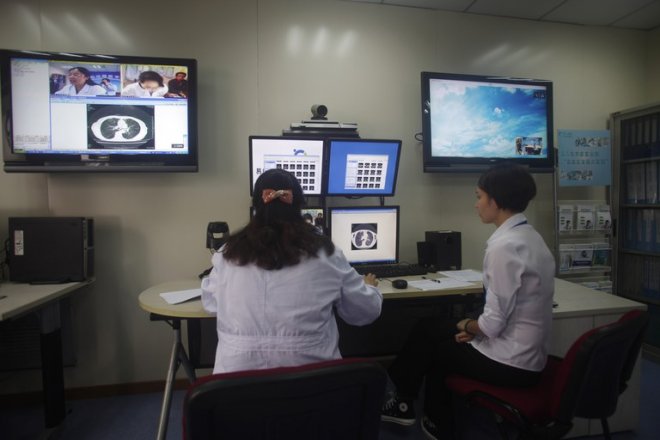
The plan to digitize health records has prompted fears about the security of the data and the possibility that hackers could access it. Credit: Reuters file photo
Discrimination and security fears
Disabled activists in China say that stringent health-check standards bar people with many disabilities and other medical conditions from getting work as teachers or other civil servants, highlighting rampant employment discrimination by governments around the country.
Rights groups have highlighted widespread discrimination against people with HIV and people with disabilities in China, including the exclusion of disabled children from schooling from an early age.
The move has also prompted fears around data security, with so much sensitive information held electronically.
In July, a hacker forum user with the handle ChinaDan posted an offer for sale of 23 terabytes of data from the Shanghai Police Department that included sensitive personal information on 1 billion people.
ChinaDan didn"t specify how they came by the data, only that it was hosted on Alibaba Cloud, but uploaded three folders containing some 750,000 database entries by way of a sample for potential buyers.
Exiled dissident surgeon He Anquan, who currently works in New York, said the end result of the digitization program could be that people"s private information is posted online for all the world to read.
"National networks carrying information like blood type, personal home address, family background and ... even DNA could be attacked by hackers ... with people"s private information being exposed for all to see," He told RFA in a recent interview.
"Privacy could become a thing of the past," he said.
The Nov. 9 document also calls for the national health information platform to "promote the exchange and sharing of test results."
According to He, the move is particularly worrying given that the authorities have already used the Health Code COVID-19 app to restrict the movements of political dissidents, as well as people planning to protest the mass freezing of rural bank accounts in June.
Online records of government tenders and contracts gathered by RFA in August 2019 showed that provincial and municipal authorities across China were buying large amounts of instruments, tools and medical supplies designed to collect DNA samples from people.
"We are seeing the rise of high-tech authoritarianism ... particularly the use of high-tech methods to control the population by a totalitarian government," He told RFA.
"Dissidents like me used to joke that when you get out of jail in China, you just wind up in a bigger prison -- China," he said. "If that bigger prison is getting a digital upgrade, then that"s pretty terrifying."
Social media concerns
Some comments under the hashtag #AllResidentsToHaveFullyFunctionalHealthCodesBy2025 on the social media platform Weibo echoed He"s concerns.
User @Li_Tiezhu"s_Crown commented, in an apparent reference to the Henan rural bank protesters prevented from leaving their homes by the COVID-19 Health Code app: "Given the red health codes allocated to those petitioners in Henan, I really can"t believe that this electronic health code ... is really about our health."
User @Li_Zhengxi_Sissi added: "Wouldn"t it sound fancier just to call it monitoring integration?" while @aro-ace commented: "Having difficulty breathing."
@There_is_a_grocery_store_in_the_mountains said they opposed the plan.
"Such tools and methods aren"t necessary for normal medical treatment ... codes should make things more convenient for people, not be allowed to define them by their [medical] attributes," the user said. "They shouldn"t always be thinking about how they can use such tools to define, curb and restrict people."
@Tsuruko_Namikawa"s comment was blunter still: "Looks similar to the way you"d brand a pig."
Translated and edited by Luisetta Mudie.
 | 喜歡這篇嗎?快分享吧! |
前一頁
後一頁









 The plan to digitize health records has prompted fears about the security of the data and the possibility that hackers could access it. Credit: Reuters file photoDiscrimination and security fears